1. What Is Tanabata?
Tanabata, known as the Star Festival, is celebrated every year on July 7 in Japan. This romantic festival is based on the Chinese legend of Orihime (the weaver princess) and Hikoboshi (the cowherd), two star-crossed lovers represented by Vega and Altair. According to the legend, they are separated by the Milky Way and allowed to meet just once a year—on the seventh day of the seventh lunar month.
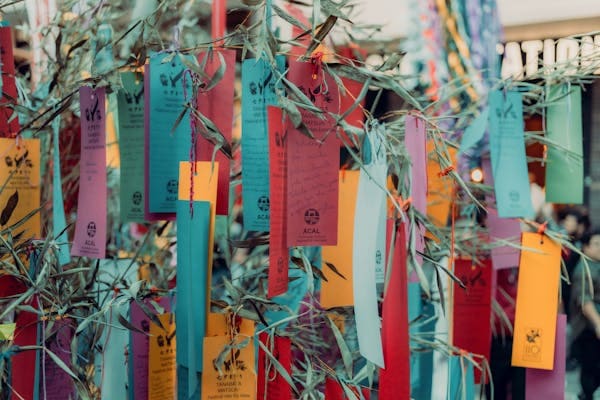
On Tanabata, people write their hopes and dreams on narrow strips of colored paper called tanzaku, and hang them on bamboo branches. These wishes, fluttering gently in the breeze, evoke a hopeful mood and a sense of spiritual unity.
2. Tanabata Festival Traditions in Japan
2.1 Tanzaku & Bamboo Decorations
As the festival approaches, public spaces, train stations, and convenience stores are adorned with long bamboo poles decorated with tanzaku, streamers, and paper ornaments. Families and schools also create custom bamboo displays featuring children’s wishes.
2.2 Tanabata-Themed Foods
Many cafes and restaurants offer Tanabata-themed menu items, such as star-shaped noodles, pastel-hued jellies, and shimmering desserts. Some even provide mini tanzaku for patrons to write their own wishes — blending tradition into everyday life.
3. Sendai Tanabata: Japan’s Premier Star Festival
Held in early August, Sendai’s Tanabata Festival is one of Japan’s largest and most famous Star Festivals. Its downtown streets are lined with towering bamboo and dazzling paper streamers over 20 feet long, creating a breathtaking atmosphere.
If you're researching “Sendai Tanabata Japan,” this festival is the poster event—filled with parades, lanterns, and shared summer celebration.
4. Lessons Learned from Tanabata
Tanabata taught me:
- Wishes guide our path — the bamboo branches full of tanzaku remind us to reflect and set intentions.
- Patience leads to reunion — the story of Orihime and Hikoboshi symbolizes enduring love and hope.
- Connection with nature — bamboo branches, wind, summer air—all encourage mindfulness and presence.
5. Why Tanabata Matters Today
In contemporary Japan, Tanabata remains culturally significant. Local communities host smaller festivals, city centers stay gorgeously decorated, and people gather to share wishes and enjoy star-themed sweets.
Key search terms like “Star Festival traditions” show that interest is strong not just in tradition, but in how everyday people, whether in Tokyo or Yamagata, keep Tanabata alive.
6. Summary
Tanabata is a celebration of love, hope, and the timeless act of making a wish. Whether you visit the majestic Sendai Tanabata Festival, decorate bamboo at home, or simply write your own wish under the summer stars, you're participating in a centuries-old ritual of unity and yearning.
This Star Festival invites each of us to pause, dream, and connect—because every wish, once understood, carries its own place in the universe.
If you're interested in traveling to Japan, please feel free to contact us.